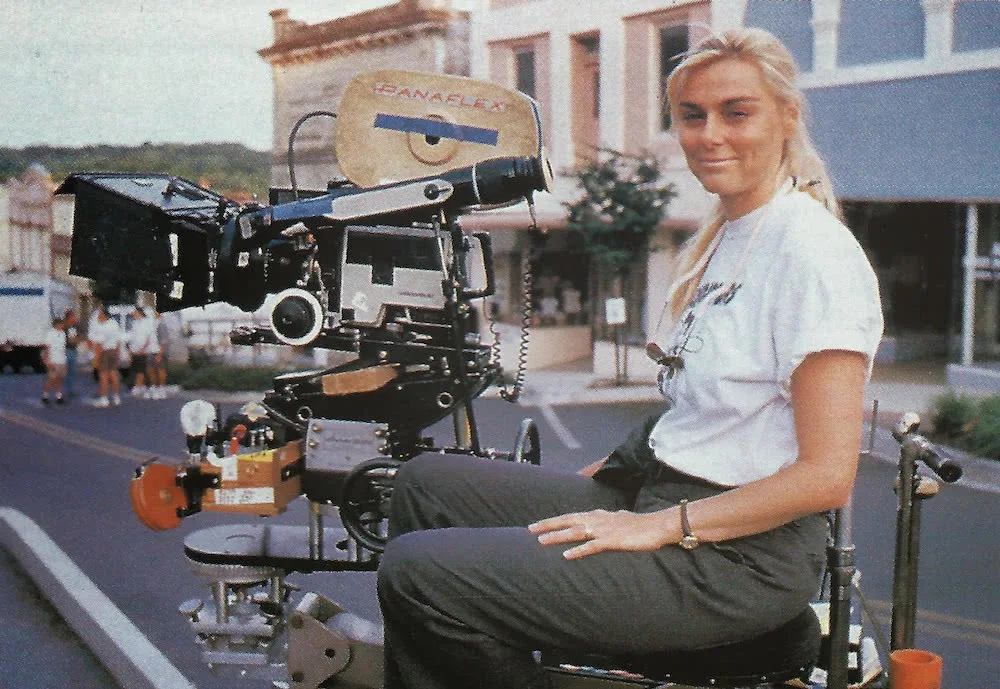
A couple of months ago I dared to write to Katt Shea and ask her for an interview. I didn’t expect her to answer as she is a very busy woman. To my surprise, she replied just three minutes later, saying: “Sure, I’d be happy to. Just send me your questions”.
I rushed to my girls with this wonderful news and together we thought of the most heartfelt and burning questions and sent them to Katt Shea. Today we are more than happy to share this interview with you!
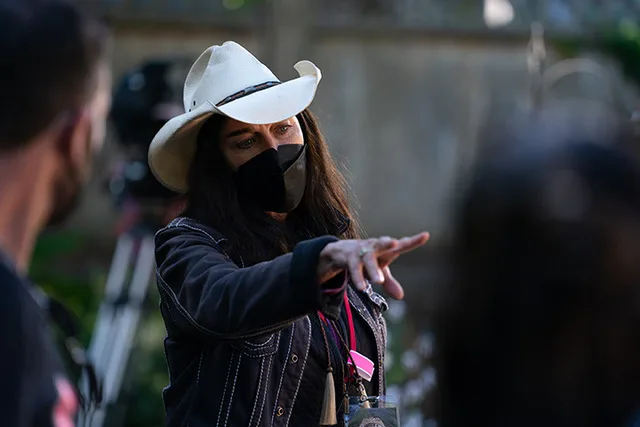
If you haven’t read our article about Katt Shea, here is some information about this amazing director: Katt Shea is a filmmaker who transitioned from acting in low-budget horror to becoming a cult auteur known for her raw, uncompromising portraits of life on the edge. She is the creative force behind some of the most iconic cult films of the late 80s and early 90s, including the legendary Poison Ivy and the gritty street-drama Streets. Katt is able to thrive under pressure, famously stepping in to save the production of The Rage: Carrie 2 and transforming it into a biting critique of 90s “jock culture” and high school cruelty. She is a master of finding the “human heartbeat” inside the loud, often messy world of B-movies and psychological thrillers.
Shea has spent her career proving that a small budget is no barrier to deep psychological insight. She remains a vital figure for anyone interested in how genre cinema can be used to explore the darkest, most human corners of our society with both grit and grace.
Interview with Katt Shea.
Thank you very much for agreeing to give us an interview! We can’t believe our luck! Since our project focuses on female horror directors, we would like to ask you some questions about your experience in this sphere. What was it like to be a female horror director in the 80s and 90s? Did you feel any pressure or special attention from the film crew and audience?
I’ve talked about this a lot, it’s very difficult to be female in a profession so dominated by men. It looks like things are changing but that’s only on the surface. I think the actual numbers are getting worse. It’s also very hard to command respect, you don’t get it automatically because you’re in the director’s chair the way that men do. You have to inspire the crew with really well thought out ideas clearly communicated. You have to get them excited about what you want to create. You really need that so that your troops follow you into the battleground of shooting and want to help you to convey your vision. I think as a female, your first job when you’re putting a crew together is to inspire first to garner that respect … and make sure the people you are hiring can be inspired. Some with very good credits cannot.
Even if you do what I described above, you may have some very hardened attitudes to conquer, and not just from men but other women. It’s tough. You need support and you will have to deal with producers choices which may be very different from your own. You may have recalcitrant stars as well, there are plenty of those.
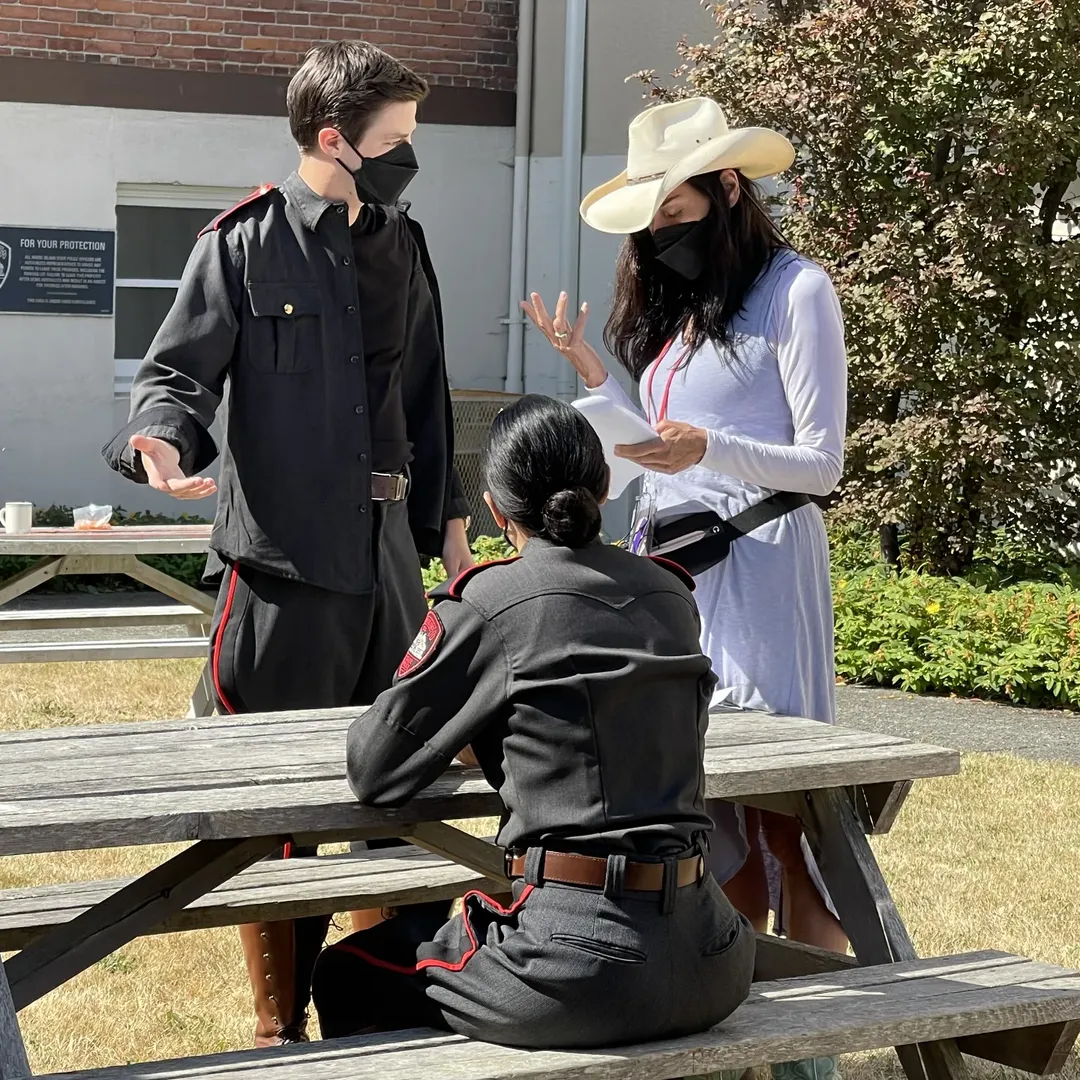
It seems like everyone wants to direct, but I don’t think they know what’s really involved. YOU have a vision, but others want to do things their own way. If you don’t have a very firm handle on that vision and convey it very clearly all the time to everyone, you will be herding cats. Leave no stone unturned, you need to be able to answer every question. You need to have a vision for every character and not just leave it to the actor to interpret from the script. Then, you need to be flexible to get the best from the other tender artists on your set.
Find a cinematographer and editor who can become your best friend.
On a day to day basis, I have a board where I write all the shots for ALL to see.
You literally saved the sequel to “Carrie” and gave this story a new meaning. Nowadays “The Rage: Carrie 2” has acquired the status of a “cult movie” and recognition from viewers for its progressive ideas. How important was it for you to show the dangers of toxic masculinity and male privilege? And do you feel like the film was ahead of its time?
It’s always important to me to be telling a story, getting a point of view across to the audience. If I’m not doing that, what’s the point? So many movies now don’t seem to have a point of view and they loose me pretty early on. I walk out or turn it off.
“The Rage: Carrie 2” was not well received when it came out and I understand it is beloved now. I’m very grateful for that. Jeff Kleeman who produced it and was vice president of UA at the time told me many times that the reaction in 1998 was because it was so ahead of its time.
I actually hear that a lot about movies I’ve directed or written.
“Stripped to Kill” was one of your early directorial projects. What was the most challenging part of working on this film?
That is an overwhelming question, there were so many challenges. I wasn’t given a lot of support from the execs, perhaps because I wasn’t on the list of directors to hire and kind of came out of left field with a pitch directly to Roger Corman for writing Stripped To Kill. As I shared in an earlier interview, I was in my 20s, when I wrote and directed my first film for the world famous producer Roger Corman. I looked 17 however and was from Michigan. I was a fledgling screenwriter and Andy Ruben was my partner. It came about because we were in a restaurant and I ordered mussels, Andy informed me that mussels are poisonous at certain times of the year. I didn’t believe him so he offered a bet, If he was correct, I would have to go to a strip club (it’s the worst thing he could come up with for me).
Fortunately, the chef confirmed that he was correct — and I, the mid-western college girl has to go watch a strip show!
I paced back and forth in front of a strip joint called The Body Shoppe on Sunset Blvd. I was there for what felt like ages when Andy finally give in and said I didn’t have to do it. THAT made me find the nerve to go in (alone of course.). I was immediately carded which happened everywhere, then mistaken for an off duty stripper. which kind of freaked me out; this was long before the age of pole dancing which my future movie eventually brought to the mainstream.
I sat at a table and waited to be mortified. But it wasn’t that bad.
The first dancer was pretty tasteful, did some elegant moves and at the end took her top off for about 20 seconds. The next one came out, Cheri, pronounced like Mon Cheri, prowled the stage and used her eyes more powerfully than anyone I’d ever seen, looking right at customers with a sultry stare. She eyed the pole like some sort of wild cat, grabbed it with both hands and with only her arm strength, lifted her entire body parallel with the pole, then upside down as if gravity was no issue at all.
Thoroughly intrigued, I moved to the runway. Cheri eyed the audience again, as if to evaluate whether there were enough people here to take her top off. She decided there weren’t and left the stage.
Finally, Lucia came out - she was a true performer with a puppet act. The puppet took her clothes off while she fights him. This could have been on Sesame Street if not for the boobs. I was mesmerized.
Andy was down the street at a nearby bar probably looking at his watch.
Hours later I finally popped out the front door, Andy was waiting outside. I told him that it is was incredible and that we had to make a movie about it!!! “And you know who’ll do it? Roger Corman, king of the Bs!”
I’d acted in a couple of Roger Corman productions in South America and the Philippines — I used to call it seeing the world with Roger Corman - you don’t have to join the military, just scream well! Joking, you have to be a pretty good actor or have other attributes.
I had studied acting with the hottest Hollywood acting guru for 2 years and couldn’t book an audition if my life depended on it. Then I met Candy Hurst and learned how to be free and really intuitive in my acting and I started booking the roles I was lucky enough to get auditions for. It was fun rather than the torture of a conventional acting class and it’s the basis for what I teach actors today and actually use on-set when actors whom I’m directing get stuck.
I not only started booking roles with this new technique, I would be asked if I was available before I left the audition room. Auditions are now all self tapes but the same techniques apply and I’ve had students book work directly from their class tapes. Anyway, back to the question of how I got started in the entertainment business … I’d became obsessed with what I saw at the Body Shoppe. As many movies as I’d seen, I’d NEVER seen this pole dancing thing. It was hidden away in dark corners — practically no one had except for some dirty ol’ men. It was time to bring it into the light!
I just had to figure out how to get a meeting. Even though I’d been in movies for Roger Corman I couldn’t just call and get a meeting to pitch a movie.
I had an idea.
I parked outside Corman’s office and watched. I could see him on the second floor with his back to a big picture window, sitting at his desk. I knew he often walked to lunch at around noon.
When I saw him get up from his desk, I jumped out of my car and ran down the street to head him off. When I saw Roger walking toward me and began casually strolling and “accidentally” bumped into him. “Oh wow! Roger! Hi. I’m Katt. I was in The Destroyers? And the Barbarian Queen …” Roger seems delighted to see me, “Oh yes, I remember! Now, I heard that there were some problems and you were very helpful to the director!”
Great! It was then easy to say, “I have an idea for a movie, you’ll love!”
I pitched my movie idea emphasizing that girls fly around a pole with hardly any clothes on. That got his attention. Imagine the poster!
Roger told me to come in with the details Monday morning.
Andy and I worked out a pitch and Andy insisted that I tell Roger I would direct it, “You directed plays in your back yard when you were a kid, it’s in your blood, You can do it.
ABSOLUTELY NOT!!! I was adamant that I will not try to direct it.
I pitched the story to Roger. It involved a female cop going undercover in a strip joint and the male killer posing a female stripper. I told him real strippers must be cast in the supporting roles, because their acts are incredible … and excitedly added (to my surprise) that I would direct it.
I said it could be shot on Super 16 and be done for an incredibly low budget.
Roger didn’t say no. He was interested.
I carefully choose the real performers by scouring strip clubs all over Los Angeles. Many of the acts are lurid and really offensive, but I found the real gems and approached these suspicious and guarded young women with my pitch. They’d always ask, “How old are you?” like I couldn’t be serious. They nick named me “college girl”. It took a while to gain their trust. After I did, I learned about their lives and began giving these special performers acting class in my living room.
The girls I’d chosen were learning to act by doing parts from the stage play “Vanities” about cheerleader/sorority sisters and their friendship. None of them even remotely resembled sorority girls. But the play sufficed for the moment as it has a lot of roles for the girls and Andy and I didn’t have the script written yet.
Getting to know them, we took lots of notes on how the performers really talked to one another, their jokes and attitude, all of which were pretty spicy and wound up in the script.
Roger had serious reservations about a man pulling off being a stripper and told me he couldn’t move forward with the project. I went into emergency mode finding pictures of half naked guys looking like girls and pics of real half naked girls and mailed them to Roger with a note challenging him: Which is the real girl????
This went on for weeks.
In the meantime, Andy and I went to female impersonator shows looking for our dual role star.
Roger called me to his office to tell me I absolutely cannot make the “picture”, because there’s no way a guy can pull this off.
I wouldn’t take no for an answer and told him that I currently had a really great acting role in Psycho III and that my makeup artist was none other than Mike Westmore who won the Academy Award for his special effects makeup in The Raging Bull! I told Roger that Mike assured me he can do prosthetic breasts and it will look fabulous!!!
“Mike Westmore?” Roger seemed very impressed.
The next day, in the makeup chair I asked Mike if he could do prosthetic breasts. I told him I had a shot at directing a movie if I can convince Roger that this will work. Mike couldn’t believe it, he could count the number of women who’ve directed movies in Hollywood on two hands, but Roger is always the one who hires them. He winked and said he will make the breasts for cost.
I brought Roger a letter from Mike saying he would do just that. Roger finally said ok. but I had to take some classes in directing at UCLA. I was thrilled.
I brought the strippers to Ted Post’s Master Class to do a scene from my script. Ted was a highly respected director of both TV and movies.
My performers were really creative, talented and totally uninhibited. My classmates were dumbstruck.
I tried to explain in class that I was trying to convey that art can come from unexpected places - that these women were performance artists and using the only venue they had to express it. Ted loved it.
A fellow female student was very disapproving and tried to tear us down, saying “If you have a message use Western Union”. Ted supported me, asked me to stay for a moment after class and told me I was really good. “How do you know?” I’d asked. He said because I had something to say.
Meanwhile, Cheri, a favorite of mine because of the way she used her eyes and seemed to levitate around the pole, began to self destruct; missing rehearsals, calling crying with excuses. I was heartbroken but I had to replace her. Another cast member, Debbie, the youngest, was starting to screw up too. And Michelle who was scripted to do the opening dance constantly repeated, “I can’t”.
Andy suggested Debbie move in with us so we could keep an eye on her. I told the young toughie (if she wasn’t stripping she’d be boxing) that she could move into the spare bedroom, but no drinking or drugging. Debbie promised with all her heart to be good and told us that no one had ever treated her the way we did. She became our errant child. The wise Lucia told me that Debbie liked having some discipline in her life, nothing had ever been expected of her before.
Andy installed a pole in the garage so the performers could practice. Each dancer was totally unique: Tracy, was a gymnast with a truly elegant routine and flat out awesome to watch. She didn’t do the eye thing or the pole thing, but her back flips that result in splits were spectacular.
It took Debbie, Michelle and Tracy to actually fill Cheri’s stilettos.
Athena was a fire eater and magician, Lucia would come out in blacklight dressed as an alien with florescent whips, Michelle was a modern dancer and Debbie a sexy badass. Debbie and Michelle were assigned to fly around the pole.
One afternoon, Roger called and told me he was backing out. I responded instantly and authoritatively, “No you’re not! Roger were doing this! It’s going to be great. I promise you!” There was silence on the other end of the phone. I think he was stunned, nobody talked to him that way. Roger’s own execs were scared of him. He had a reputation for being daunting, yet .. incredibly he accepted this.
He’d been of the fence the whole time and at this point I had to push him over. I found courage because of the weight of responsibility of what this movie meant to the girls and even what I meant to them. I looked the same age if not younger than they were, yet to them I was moving mountains, not taking no for an answer and doing the impossible… and it was inspiring to them.
The next day I barged into Roger’s office with Ron, a female impersonator, in tow. This sweet young man was super nervous, quivering and full of anxiety. I intended to reassure Roger by having Ron explain what he does with his junk in a G-string. Roger, who was proper to the extreme, looked uncomfortable and got more and more uncomfortable as Ron went into great and gory detail about where his organs were tugged and tucked to accommodate a G-string.
Roger eyes were popping when he jumped out of his chair, saying “You can do the picture, just get out of my office!” Ronnie practically ran out of the office and I split before Roger could change his mind again.
It had been a full year of convincing, and finally it seems to be a full go-ahead.
I was heavy into preproduction when Roger called me into the office to tell me I would be shooting 35 mm film on a 30 day schedule. He even gave me a raise.
Someone outside the company clued me in on the reason for all of this — that based on the script that Andy and I wrote, MGM paid Roger 3 million dollars for video rights. I couldn’t believe it! It seemed too good to be true.
The shoot was grueling with many obstacles and post production was even more brutal. Roger was furious with me when I showed him a cut he deemed too long. I was pretty sure he never wanted to see me again. I was exhausted and spent by the time we finished.
Besides many other obvious themes, your movie “Streets” also speaks about the longing to have someone who shares your loneliness, no matter who you are and where you’re from – rich or poor – everyone needs someone by their side. Was this idea that ‘you’re not alone’ intentional? Did you want to let people who happen to be in similar difficult life situation feel seen and encouraged that they are not alone?
I love that interpretation! Yes, absolutely. It’s a dangerous and scary world sometimes and we need each other. We find friends sometimes where we least expect it.
While watching “Streets”, I also paid attention to how deliberate you are with picking up certain colours for certain scenes and even characters. I think this is an amazing thing which certainly adds to the overall emotion/tonality of the story. Do you always follow this rule? How do you feel about working with colour palettes while doing projects now? How do you pick colours, if you do? Because now, people usually do mood boards. What’s about your approach?
I always have a complete plan about the look of a movie. What colors, camera movement, composition will convey what I want to convey. In the case of Streets, I actually painted my script with watercolors so my team (production designer, cinematographer, wardrobe, transportation) would have a very clear idea of what colors could be in the frame. My crew actually pushed wrong colored cars out of the way if they were in a shot or quickly painted a background. That’s what I mean when I say you have to inspire a crew and gain their respect because they are the ones who bring the vision to life.
Camera movement also conveys a feeling. All the shots in Streets were composed like a painting. Transitions from scene to scene were designed to flow as part of the story telling. This is very opposite from Stripped To Kill where the feeling was fragmented and abrupt.
Many of your films feature complex and contradictory female characters. Was this a conscious choice of themes, or did it develop gradually as you worked?
That is a great compliment because I try to create very real characters female and male, as humans we are nothing if not complex and contradictory.
How has the film industry changed since the 80s in relation to women? Could you highlight any contemporary projects directed by women?
I don’t know that it’s changed that much. Sadly, I think I got more respect as a director when I was starting out. Then, there was a feeling that if I was directing I had to have beat out a lot of men and so I must belong there.
In recent years, even after everything I’ve been through and done, there was kind of a vibe among those I hadn’t worked with before that I must be a political hire. So it is actually harder now to inspire with that perspective. I know female directors who feel they have to control everything and be monsters to get the respect that is automatically afforded to men. That’s horrible for everyone involved.
There’s always the exception Katherine Bigalow and Chloe Zhao and I am very happy for them!
Back in the day however, if women could get a job a lot of times they were directing men’s stories. That seems to have changed and there have been some great horror movies made by women with a distinctly female perspective.
Looking back, is there anything you would have done differently in any of your projects?
I’m sure there are things I would do differently. For sure things I would have handled differently but I try not to look back with any regrets and move forward with better knowledge now.
Do you think that the director’s gender plays a role in the creation of genre films? How does a female perspective differ from a male one?
I’ve never been the right person to ask that question of. I always said I’m not a female director, I’m just a person.
What recent horror movies did you like? And what are your all-time favourite horror movies? What inspires you?
The original Carrie is my favorite. It was so powerful and meaningful. Sissy Spacek’s Carrie was so relatable to me and her revenge was sweet. That movie really changed how I saw movies - that a movie could be so relatable and make me feel better about the difficulties of life. Unfortunately that doesn’t seem to work as an outlet for people any more, they go out and kill for real.
What kind of movies do you watch? Who are your favourite directors?
I loved Baz Luhrmann’s movie Elvis. The story was great, the acting was great and the visuals and transitions were absolutely superb.
Would you like to make a horror movie again?
It depends on its point of view. Maybe.
What projects are you planning to fulfill? What are you working on now?
What I’m working on now is not in the horror genre. I think the world is full of enough horrors at the moment and we may be in need of something more inspiring.
If you could give advice to an aspiring female horror director on how to maintain her unique perspective, what would it be?
If you know what your perspective is go full out and convey it to everyone, get them excited about it. Inspire. Be strong. Be kind.